Pool Deck Resurfacing Cost: What You’ll Actually Pay in 2024
The pool deck resurfacing cost most homeowners see falls between $3 and $7 per square foot, which puts a typical 500-square-foot deck at roughly $1,500 to $3,500 all in. At the bottom of that range you are recoating a sound concrete slab with a textured acrylic finish. At the top you are stamping or tiling over concrete that has cracked, faded, and weathered through years of sun, chlorine, and freeze-thaw cycles.
The number moves for a simple reason: “resurfacing” is a catch-all term that covers a dozen different finishes, each with its own material price and labor demands. Before you call contractors, it pays to understand exactly what you are buying. Here is a straight breakdown of what resurfacing costs, method by method, so you can compare quotes on equal footing.
What Pool Deck Resurfacing Involves
Resurfacing means putting a new wearing surface over an existing concrete pool deck without tearing the slab out. It only works when the slab underneath is structurally sound. If your concrete has deep, wide cracks, sinking sections, or heaving from tree roots and frost, resurfacing will fail quickly — the new finish cracks right along with the old slab. In that case you are looking at a full pour, not a coating.
For a sound deck, though, resurfacing buys a fresh look at a fraction of the price of replacement. The typical process runs like this:
- Cleaning and prep. The crew pressure-washes the deck, kills any algae or mildew, and strips old paint or sealers so the new material bonds.
- Crack and spall repair. Small cracks get filled, chipped edges get patched, and the whole surface is leveled where needed.
- Priming and coating. Depending on the method, the crew rolls, sprays, or trowels on the new finish in one or two coats.
- Sealing. Most finishes get a clear topcoat sealer to lock in color and resist chlorine and UV.
Prep is where cheap bids fall apart. Skimping on cleaning and crack repair saves a few hundred dollars up front and costs you a finish that flakes within two seasons.
Pool Deck Resurfacing Cost by Method
This is the table to keep open while you read quotes. Costs are per square foot, installed, for a typical residential pool deck.
| Method | Installed Cost (sq ft) | Typical Lifespan | Best For |
|---|---|---|---|
| Acrylic coating (Kool Deck type) | $3–$6 | 5–10 years | Budget refresh, cool surface |
| Spray-texture overlay | $3–$7 | 5–12 years | Slip-resistant texture |
| Stamped concrete overlay | $6–$15 | 10–20 years | Stone or brick look |
| Epoxy or paint coating | $2–$5 | 3–7 years | Quick, low-cost color |
| Rubber / poured-in-place | $8–$15 | 8–15 years | Cushioned, kid-friendly |
| Tile or stone overlay | $10–$30 | 20+ years | High-end finish |
Acrylic coatings — the original “cool deck” finish made popular by Mortex’s Kool Deck and similar products — are the workhorse of pool deck resurfacing. They go on with a trowel or sprayer, hide minor flaws, and stay cooler underfoot than raw concrete or pavers. Stamped overlays give you the look of flagstone, brick, or slate for a fraction of the cost of the real thing. Tile is the premium play: exterior-rated porcelain looks sharp and lasts decades, but the material and the thinset work push it to the top of the price range. Bob Vila’s breakdown of pool deck resurfacing options compares the finishes in more detail if you want to go deeper on any one method.
Photo by Pixabay via Pexels
Factors That Move Pool Deck Resurfacing Cost
Four things explain most of the spread between two quotes for the same deck.
Deck size and layout. Square footage is the biggest lever. Most residential pool decks run 400 to 700 square feet, and every extra hundred feet adds $300 to $700 to the job. Curves, steps, and tight corners around the pool’s edge slow the crew down and add labor hours.
Condition of the existing slab. A clean, crack-free slab is quick to prep. A deck that needs extensive patching, leveling, or removal of old flaking coatings can add $1 to $3 per square foot before the new finish even goes down.
Finish choice. As the table shows, the material alone can swing the price fourfold. Acrylic and epoxy sit low; stamped, rubber, and tile sit high.
Your market and season. Labor rates vary by region — expect to pay more in coastal metros than in the Midwest or South. Summer is peak pool season, and contractors book out weeks in advance, which can push quotes up. Scheduling in early spring or fall sometimes earns you a better rate.
Resurfacing vs. Replacing the Whole Deck
The single most important cost decision is whether to resurface at all. Resurfacing saves money only when the slab is worth saving.
Resurface when the concrete is solid, cracks are hairline, and the deck is simply ugly, slippery, or faded. Budget $3 to $7 per square foot for a coating or overlay.
Replace when the slab has sunk, heaved, or cracked into large shifting pieces. A full concrete replacement runs $8 to $20 per square foot, and adding pavers or natural stone pushes it higher still. Pouring a new slab also lets you fix underlying drainage and slope problems that a coating can never solve.
A good middle path is to have a contractor evaluate the slab before you commit. Most will do this free as part of the quote. If the verdict is “structurally fine,” resurfacing is almost always the better value — you get most of the look for a third of the price of a new pour.
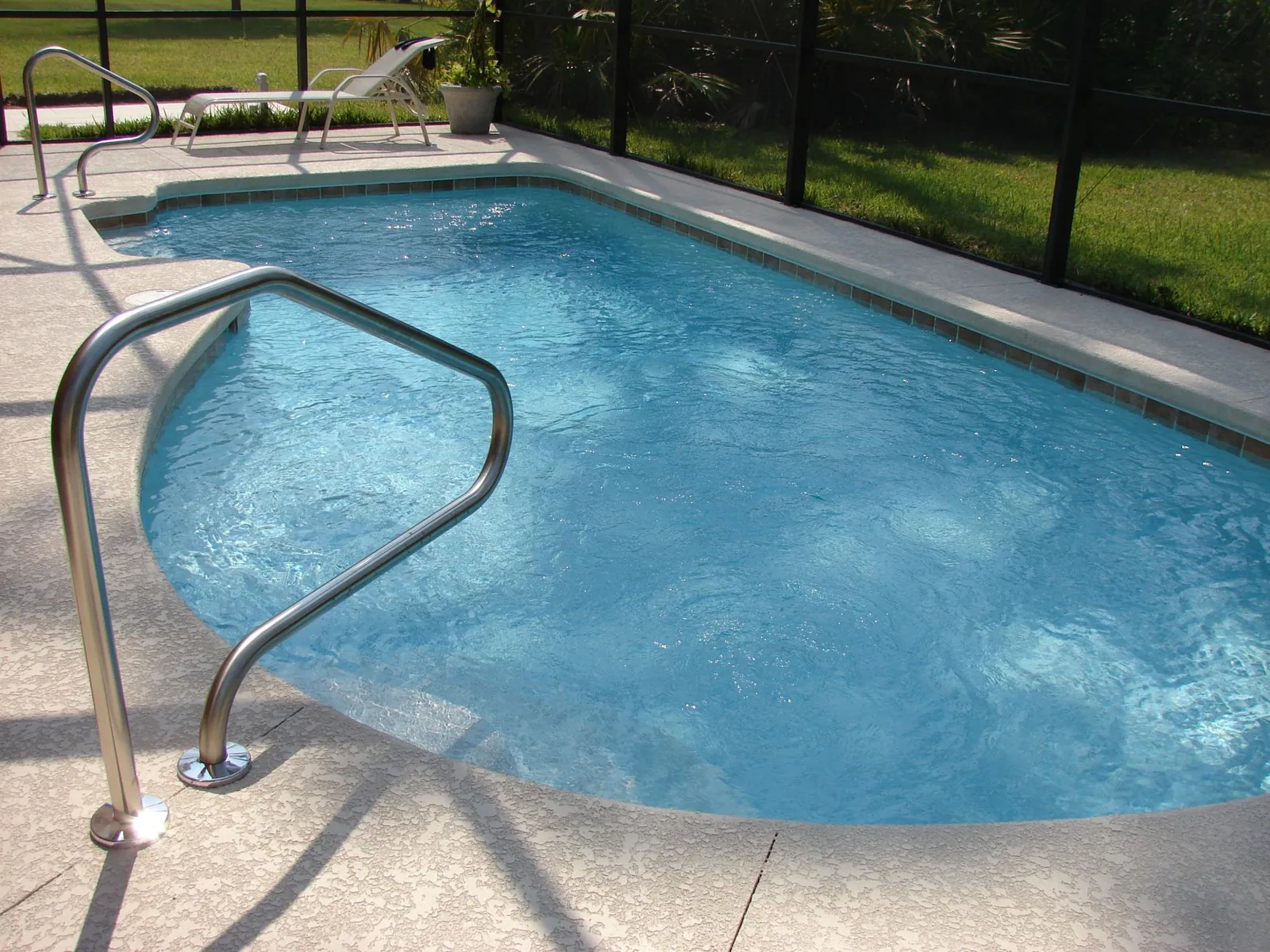
Photo by Pixabay via Pexels
DIY Pool Deck Resurfacing: What’s Realistic
You can genuinely cut the cost of resurfacing a pool deck by doing some of the work yourself, but know where the line is.
Safe to DIY: rolling or spraying an acrylic or epoxy coating on a small, flat deck. Big-box stores sell concrete resurfacer and pool deck coatings from brands like H&C, Sherwin-Williams, and Rust-Oleum, and a 500-square-foot deck might run $300 to $800 in materials. A pressure-washer rental, patching compound, and a long-handled roller round out the supply list.
Leave to a pro: stamped overlays, tile, rubber, and any deck with structural cracks. Stamping requires a crew to work fast before the overlay sets; tile needs precise cuts around the pool edge; and if the slab is moving, no coating will fix it. Hiring out also protects the finish — most pros warrant their work for several years, which a DIY job won’t have.
If you go the DIY route, the prep is where the result is decided. Spend a full day cleaning, repairing cracks, and masking edges before you open a single can of coating. Rushing prep is the number one reason DIY resurfacing jobs peel within a year. This Old House has a thorough guide to resurfacing concrete that walks through the coating options and prep steps.
While you have the yard open, it is worth thinking about the bigger picture. A resurfaced deck next to a tired fence or a bare patio looks unfinished. Our guides to pergola cost per square foot and deck railing ideas cover the surrounding structures that make a pool area feel complete.
Frequently Asked Questions
How much does it cost to resurface a pool deck?
Most homeowners pay $3 to $7 per square foot, or about $1,500 to $3,500 for a typical 500-square-foot deck. Basic acrylic or epoxy coatings sit at the low end; stamped overlays and tile run higher, from $6 up to $30 per square foot.
Is pool deck resurfacing worth it?
Yes, when the slab is sound. Resurfacing costs a third to half of what a full concrete replacement runs and delivers a near-new look. If the slab has structural cracks or sinking, though, resurfacing is throwing money at a problem only a new pour will fix.
How long does a resurfaced pool deck last?
It depends on the finish. Epoxy and paint coatings last 3 to 7 years; acrylic and spray-texture finishes last 5 to 12 years; stamped overlays can go 10 to 20 years with a sealer refresh every few years. Sun exposure, chlorine, and freeze-thaw cycles shorten all of them.
Can I resurface a pool deck myself?
You can for simple acrylic or epoxy coatings on a small, flat deck, which keeps material costs down to roughly $300 to $800. Stamped overlays, tile, and rubber finishes are best left to professionals because of the specialized tools and speed they require.
Does resurfacing make a pool deck cooler underfoot?
Acrylic and “cool deck” finishes are noticeably cooler than raw concrete, pavers, or stone because their textured, light-reflective surface sheds heat. Dark epoxy or stained concrete, by contrast, will get hot in direct sun.
The Bottom Line
Pool deck resurfacing cost is not one number — it is a decision you make by choosing a finish and being honest about the slab underneath it. For a sound deck, budget $3 to $7 per square foot for a coating or overlay, and expect the finish to last anywhere from a few years for cheap paint to two decades for a quality stamped or tile job. For a slab that is cracked, sunk, or heaving, put the money toward a proper replacement instead of a coating that will fail.
Before you sign anything, get three written quotes and make each one break out prep, materials, and labor separately — that line-item detail is how you spot the contractor who plans to skip the cleaning and pocket the difference. For more on finishing out your outdoor space, see our guide to covered deck ideas. Resurfacing done right gives you a decade of barefoot mornings on a deck that looks brand new; done cheap, it is a second job waiting to happen. Spend the money on prep and the finish will take care of itself.