Concrete Walkway Cost: What Homeowners Really Pay in 2025
A concrete walkway cost runs roughly $6 to $12 per square foot for a standard poured installation, with most homeowners paying between $1,800 and $5,400 for a typical 300-square-foot path. That range is wide for a reason: thickness, finish, site prep, and your local labor market all move the needle. Before you hand a contractor a deposit, it pays to understand exactly where the money goes.
Concrete remains one of the most durable, lowest-maintenance materials you can put underfoot. It costs more than gravel or mulch but far less than natural stone, and it tends to outlast both. Here is a realistic breakdown of concrete walkway cost, including poured versus paver pricing, DIY savings, and the factors that can quietly inflate a quote.
Average Concrete Walkway Cost per Square Foot
For a basic broom-finished walkway poured at the standard 4-inch thickness, expect to pay $6 to $10 per square foot for labor and materials combined. The material itself — cement, sand, and aggregate — accounts for only about $2 to $3 per square foot; the rest is labor, forms, reinforcement, and finishing.
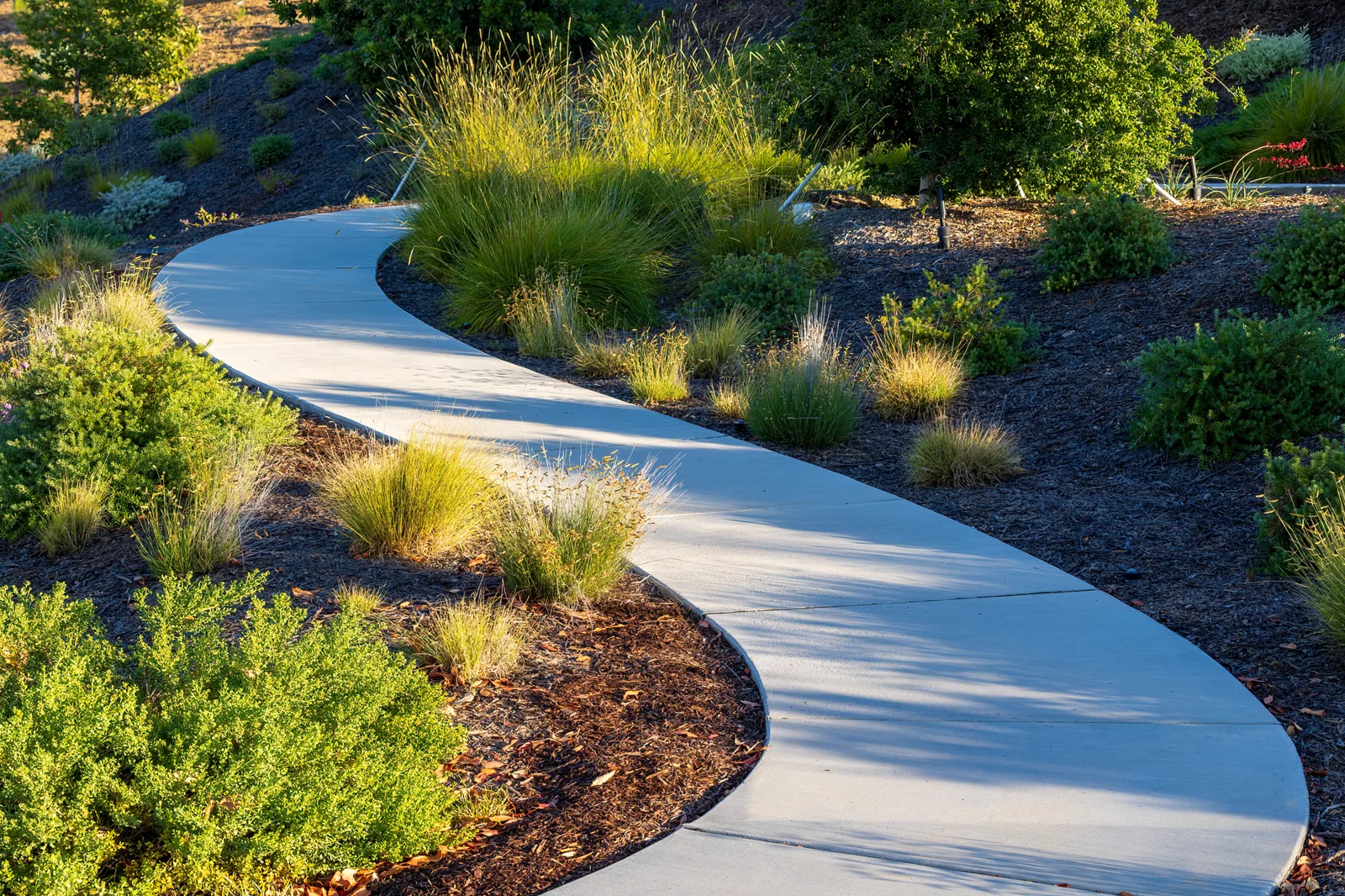
Upgrades push that number higher. A stamped or colored finish typically adds $3 to $6 per square foot, while exposed aggregate runs another $2 to $4. Curved borders, multiple steps, and walkways wider than four feet all cost extra because they demand more forming time and more finishing passes.
Here is how a typical 300-square-foot walkway prices out:
| Feature | Basic Poured | Stamped/Colored | Concrete Pavers |
|---|---|---|---|
| Material cost per sq ft | $2–$3 | $4–$6 | $4–$8 |
| Labor per sq ft | $4–$7 | $5–$8 | $6–$12 |
| Total per sq ft | $6–$10 | $9–$14 | $10–$20 |
| 300 sq ft project total | $1,800–$3,000 | $2,700–$4,200 | $3,000–$6,000 |
Keep in mind these are national averages. A small town in Ohio will land at the low end, while a coastal metro with high concrete and labor rates can double the total.
Photo by Steven Van Elk via Pexels
What Affects Concrete Walkway Cost
Several variables explain why two neighbors with similar-looking walkways get very different quotes.
Site Preparation
The cheapest pour happens on flat, already-level ground. If your path slopes, sits over tree roots, or needs old concrete removed first, prep work rises fast. Demolition and haul-away of an existing walkway typically adds $2 to $6 per square foot, and regrading or adding a gravel base adds another $1 to $3.
Thickness and Reinforcement
Most walkways are poured 4 inches thick, which is plenty for foot traffic. If you ever plan to roll a wheelbarrow, mower, or small trailer over it, upgrading to 5 or 6 inches and adding wire mesh or rebar is worth it. Expect reinforcement to add $0.50 to $1 per square foot — cheap insurance against the cracking that leads to a concrete driveway crack repair job later.
Finish and Color
A standard broom finish is the least expensive and gives good slip resistance. Stamped concrete that mimics flagstone or brick adds texture and curb appeal but also cost. Integral color mixed into the truck is cheaper than a color hardener or stain applied on site, though both change the price of concrete walkway cost meaningfully.
Access and Season
If your backyard is fenced and narrow, contractors charge more to move materials by wheelbarrow instead of backing a truck up to the pour site. Late spring and early fall are the busiest (and priciest) seasons; scheduling an early-spring or late-fall pour can sometimes trim 5% to 10% off the bid.
Poured Concrete vs. Concrete Pavers
The single biggest pricing decision you will make is whether to pour a monolithic slab or lay individual pavers. Both are concrete, but they install and age differently.
Poured concrete is faster and cheaper to install. A crew can form and pour a standard walkway in a day or two, and the result is a continuous surface with no weeds pushing between joints. The downside is cracking: every slab eventually develops control-joint cracks, and repairing a section never perfectly matches the surrounding color.
Concrete pavers cost more up front — usually $10 to $20 per square foot installed — but they are modular. A cracked or stained paver can be lifted out and replaced in minutes, and pavers tolerate ground movement far better than a rigid slab. If you live somewhere with freeze-thaw cycles or expansive clay soil, that flexibility matters.
The finish choice matters too. If you like the textured look of stone but want poured-concrete pricing, a stamped concrete patio uses the same technique for walkways at a fraction of natural-stone cost. For a lighter, pebbly surface with real visual depth, exposed aggregate concrete is another mid-range option.
Photo by Optical Chemist via Pexels
DIY vs. Hiring a Concrete Contractor
Pouring your own walkway is one of the few exterior projects where sweat equity can genuinely cut the bill in half — if you have the back for it.
The materials for a 300-square-foot, 4-inch-thick walkway run roughly $600 to $900 delivered, including bagged mix or a short-load from a ready-mix plant, forms, mesh, and finishing tools. That compares with $1,800 to $3,000 for a pro install. The savings are real.
The catch is timing. Concrete sets on its own schedule, and a single person cannot mix, pour, screed, and finish a large walkway alone before the surface starts to harden. Most successful DIY pours involve two or three helpers and a rented mixer or a ready-mix delivery, which narrows the savings. Finishing is also a learned skill — a botched float or a late control joint leaves a permanent blemish no sealer will hide.
Our advice: small, straight, low-stakes paths are reasonable DIY territory. Anything curved, sloped, stamped, or larger than about 200 square feet is usually worth hiring out. A good crew brings the forms, the screed, the bull float, and the muscle, and they carry the risk of a bad batch.
How to Lower Concrete Walkway Cost
You do not have to accept the first number a contractor writes down. A few moves reliably bring the total down.
- Get three written bids. Prices for identical work routinely vary by 30% or more between contractors. Itemize labor, materials, and prep separately so you can compare honestly.
- Keep the design simple. Straight lines, a 3-foot width, and a single finish color are the cheapest way to build. Curves and wide aprons multiply forming time.
- Pour off-season. Early spring and late fall pours often come with 5% to 10% discounts as crews fill gaps in their schedule.
- Do the demolition yourself. Renting a jackhammer and breaking up the old path can save $500 or more, and it is hard to get wrong.
- Bundle the project. If you are also planning a paver driveway or patio, scheduling all the concrete work at once usually earns a better per-square-foot rate.
Frequently Asked Questions
How much does a concrete walkway cost per square foot?
Most homeowners pay $6 to $12 per square foot installed for a basic poured walkway. Materials alone run about $2 to $3 per square foot; the rest is labor, prep, and finishing.
Is a concrete walkway cheaper than pavers?
Yes. Poured concrete typically costs $6 to $10 per square foot, while concrete pavers run $10 to $20 per square foot installed. Pavers cost more up front but are easier and cheaper to repair section by section.
How long does a concrete walkway last?
A properly poured and sealed walkway lasts 25 to 50 years. The key factors are a compacted gravel base, reinforcement, and control joints every 4 to 6 feet to direct cracking.
Can I pour a concrete walkway myself?
You can, especially for small straight paths. Materials for a 300-square-foot walkway run about $600 to $900, versus $1,800 to $3,000 for a pro. But finishing concrete correctly takes practice and at least one or two helpers, so weigh the savings against the risk of a rough result.
Does a concrete walkway add home value?
A well-built walkway improves curb appeal and first impressions, though it rarely adds dollar-for-dollar resale value the way a new roof or kitchen does. It matters most when it replaces a cracked, unsafe path. For the full picture on material pricing, This Old House and Angi both publish detailed cost breakdowns worth checking before you commit.
The Bottom Line
Plan on $6 to $12 per square foot for a poured concrete walkway, or $1,800 to $3,000 for a typical 300-square-foot path — more if you want stamping, color, curves, or paver construction. Concrete delivers exceptional durability for the price, and it is one of the few exterior upgrades where a little planning around design, season, and demolition can trim the bill by hundreds of dollars.
Get three itemized bids, keep the layout simple, and decide up front whether the DIY savings are worth the finishing risk. Done right, a concrete walkway will be the last path you install for decades.