Epoxy Garage Floor Cost: What You’ll Pay for a Durable, Showroom Finish
An epoxy garage floor is one of the few upgrades that pays you back every time you pull in. It shrugs off oil drips, road salt, and hot-tire pickup, wipes clean with a mop, and turns a scuffed concrete slab into something that looks like a dealership showroom. Before you buy, though, you want a straight answer on epoxy garage floor cost, because the numbers swing wildly depending on who does the work.
Broadly, a professionally installed epoxy floor runs $3 to $12 per square foot, with most homeowners landing between $4 and $7. A DIY kit drops that to roughly $2 to $5 per square foot, though you’re trading cash for sweat and, often, a shorter lifespan. For a typical two-car garage of 400 to 500 square feet, plan on $1,200 to $6,000 installed or $200 to $1,000 if you roll it yourself.
The spread isn’t just markup. Prep work, epoxy type, square footage, and the condition of your existing concrete all move the final bill. Here’s exactly where the money goes.
What an Epoxy Garage Floor Is (and Why It Costs What It Does)
Epoxy is a two-part thermosetting resin — a resin plus a hardener — that cures into a hard, chemically resistant film over concrete. Unlike paint, which sits on the surface, epoxy bonds into the slab and can last 10 to 20 years with light residential use. That durability is the entire value proposition, and it’s also why installers charge what they do.
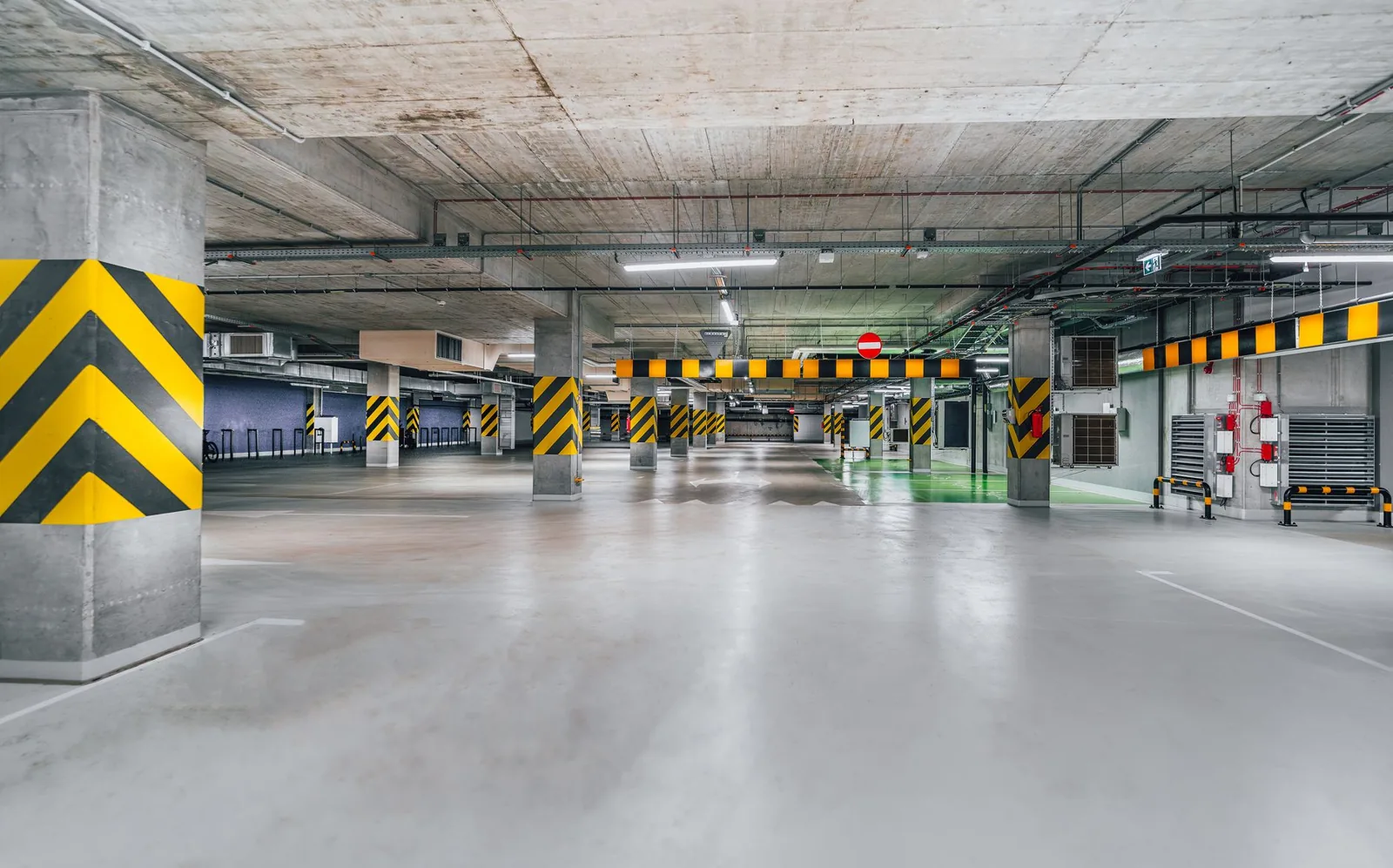
Photo by Jakub Zerdzicki via Pexels
Three main formulations dominate the residential market, and each carries a different price:
- Water-based epoxy ($30–$60 per gallon): The cheapest and easiest to apply. It’s what you find in most big-box kits, but it’s also the thinnest and least durable — expect 1 to 3 years before it starts showing wear.
- Solvent-based epoxy ($45–$80 per gallon): Thicker and more chemical-resistant than water-based. It stinks during application and needs good ventilation, but it’s a solid middle option.
- 100% solids epoxy ($60–$120 per gallon): The professional-grade choice. No solvents, so it cures thick and hard. This is what commercial garages and serious installers use, and it’s the only one that truly delivers the 10-to-20-year lifespan.
Most of the cost difference between a $700 floor and a $5,000 floor comes down to which formulation you choose and how much prep the slab needs before it goes down.
Average Epoxy Garage Floor Cost by Project Type
The quickest way to estimate your job is to look at the finished cost per square foot, which folds in materials, prep, and labor.
| Feature | Professional Install | DIY Kit |
|---|---|---|
| Cost per square foot | $3–$12 (avg. $5–$7) | $2–$5 |
| Typical 2-car garage (450 sq ft) | $2,200–$4,500 | $250–$900 |
| Materials only | Included | $60–$600 |
| Labor | $1–$7 per sq ft | $0 (your time) |
| Lifespan | 10–20 years | 1–5 years |
| Warranty | Often 5–15 years | Limited or none |
Cost by Garage Size
Square footage is the single biggest multiplier, so it pays to measure your actual slab rather than guess.
- One-car garage (250–300 sq ft): $750–$3,600 installed, $120–$600 DIY.
- Two-car garage (400–500 sq ft): $1,200–$6,000 installed, $200–$1,000 DIY.
- Three-car garage (600–800 sq ft): $1,800–$9,600 installed, $300–$1,600 DIY.
Regional labor rates matter too. A two-car garage in a high-cost metro might run $7–$12 per square foot, while the same job in a smaller market lands closer to $3–$5. Always get at least three quotes to see where your area sits.
The Big Cost Drivers You Can’t Skip
Epoxy floor pricing rarely comes down to the coating alone. These are the line items that explain why two identical garages can be quoted thousands of dollars apart.
Surface Preparation
Prep is where professionals earn their money, and it’s the step DIYers most often botch. Bare concrete won’t hold epoxy — it needs a mechanical “profile” for the resin to bite into.
- Diamond grinding ($1–$2 per sq ft): The gold standard. Removes old coatings, oil, and the weak surface laitance.
- Acid etching ($0.25–$0.50 per sq ft): Cheaper, but fussier and messier, and it doesn’t remove existing paint or heavy oil staining.
- Crack and spall repair ($2–$10 per linear foot): Cracks must be chased, filled, and sanded flat, or they’ll telegraph right through the new coating.
Skipping prep is the number-one reason DIY floors peel within a year. If your slab is oil-soaked or painted, budget for grinding regardless of who applies the epoxy.
Photo by Jan van der Wolf via Pexels
Coating System and Finish
A single clear topcoat over a base color is the budget option. Most durable installations are two to three coats — primer, color coat, and a clear urethane or polyaspartic topcoat — plus decorative broadcast flakes.
- Solid color, single coat: lowest cost.
- Two-coat with color flakes: standard mid-range option.
- Metallic epoxy: $8–$20 per square foot, a premium look with a premium price.
- Polyaspartic or polyurea topcoat: adds $1–$3 per square foot but cures faster and resists UV yellowing, which plain epoxy does not.
Labor and Location
Labor typically runs $1 to $7 per square foot, and it includes moving everything out of the garage, grinding, masking, applying, and a curing window of 24 to 72 hours before you can drive on it. If you want the floor ready to park on the same day, polyaspartic systems cure in a few hours — but they cost more up front.
DIY vs. Hiring a Pro: The Honest Math
A DIY kit looks like an easy win on paper. A Rust-Oleum EpoxyShield two-car kit runs $100–$200, and even higher-end kits from Epoxy-Coat or ArmorPoxy stay under $600. Add in a rented grinder and supplies, and you’re still well under $1,000 for a floor a contractor might quote at $3,500.
The trade-offs are real, though:
- Prep is unforgiving. Oil spots, moisture vapor, and un-ground concrete will cause peeling, and fixing a failed DIY floor costs more than doing it right the first time.
- Coverage is optimistic. Kit estimates assume clean, well-profiled concrete. Real slabs often need a second kit, which doubles your material cost.
- Cure time eats your weekend. Water-based kits need a full dry day between coats, and the garage stays out of commission for two to three days.
- No warranty. If a professional floor fails, most installers stand behind it for years.
The sensible rule: if your slab is clean, dry, and unpainted, a quality DIY kit with careful grinding can work. If it’s oil-stained, cracked, or already coated, hire a pro. For a comparison of what a properly finished concrete surface can cost elsewhere on the property, our guides on stamped concrete patio cost and exposed aggregate concrete cost break down similar square-foot math for outdoor slabs.
How to Save Money Without Ruining the Floor
Epoxy is one place where the cheapest bid is usually the worst value. Still, there are legitimate ways to trim the final number.
- Time it right. Installers are slower in late fall and winter, and some discount jobs to fill the schedule.
- Do your own prep. Grinding and crack repair are labor-heavy but not skilled. Some contractors will credit you $500–$1,500 if you prep the slab yourself.
- Skip the flakes and metallics. A solid-color two-coat floor is dramatically cheaper than decorative systems and wears the same.
- Bundle with a neighbor. Two garages on the same street lets an installer split mobilization costs.
- Compare systems honestly. A $60 kit reapplied every two years may cost more over a decade than a $3,000 professional floor that lasts 15.
If the concrete itself is in rough shape before any coating goes on, read up on how to repair cracks in a concrete driveway — the same techniques apply to a garage slab and will keep those flaws from ruining a new epoxy finish.
Frequently Asked Questions
How much does it cost to epoxy a 2-car garage floor?
For a 400 to 500 square foot two-car garage, expect $1,200 to $6,000 for a professional installation, averaging $4–$7 per square foot. A DIY kit for the same space runs $200 to $1,000 including prep supplies.
How long does an epoxy garage floor last?
A professionally applied 100% solids system lasts 10 to 20 years in a residential garage. Water-based DIY kits typically show wear in 1 to 5 years, especially under hot tires and heavy traffic.
Is epoxy garage floor coating worth the cost?
For most homeowners, yes. It protects the slab from salt and chemical stains, brightens the space, and can help with resale appeal. The This Old House team rates it among the better bang-for-the-buck garage upgrades, provided the prep is done correctly.
Can I epoxy my garage floor myself?
You can, and a careful DIYer with a rented floor grinder can save $1,500 or more. The failure points are moisture, oil stains, and un-ground concrete — address all three before you start, and plan for the garage to be off-limits for two to three days.
Why do epoxy garage floor quotes vary so much?
Prep method (grinding vs. etching), coating formulation (water-based vs. 100% solids), the number of coats, decorative flakes or metallics, and local labor rates all move the price. A bare-bones water-based job and a three-coat metallic floor can differ by $8 per square foot or more.
The Bottom Line
Epoxy garage floor cost is best understood as a range: $2 to $5 per square foot for DIY and $3 to $12 per square foot installed, with most two-car garages falling between $1,200 and $6,000 for professional work. The coating itself is only part of the bill — grinding, crack repair, and topcoat quality determine both the price and whether the floor lasts two years or twenty.
Get three written quotes, insist on surface prep in the line items, and don’t let a rock-bottom bid skip the grinding step that makes epoxy stick. Do that, and you’ll end up with a floor that pays for itself in easier cleanup and a garage that finally looks as good as the rest of your home.