Privacy Fence Ideas: 9 Designs for Real Seclusion and Curb Appeal
The best privacy fence ideas solve a specific problem: blocking a neighbor’s sight line without turning your yard into a fortress. On a flat suburban lot, a 6-foot board-on-board cedar fence usually does the job for $17 to $45 per linear foot installed. On a sloped or exposed property, you may need a stepped layout, a taller panel, or a living screen of arborvitae instead.
What “private” feels like depends on your lot, your budget, and your HOA rules. A solid 8-foot wall might give you total seclusion but can read as hostile from the street — and it may violate a local 6-foot height limit before you’ve even ordered the first post. Most homeowners land on a 6-foot fence built from wood, vinyl, or metal, softened with plants where the block feels too hard.
Below are the designs that hold up in real yards, plus honest costs for each. None of them is a one-size-fits-all answer, but one of them is very likely the right one for you.
How to Pick a Privacy Fence Before You Buy
Spend twenty minutes on the basics before you fall in love with a photo online. Four things decide how well a fence will actually work:
- Height. Six feet is the sweet spot for most lots. It blocks a standing adult’s sight line without feeling like a compound wall. Check your local code first — many municipalities cap residential fences at 6 feet in the back and 4 feet in the front.
- Wind load. A solid panel fence catches wind like a sail. If you live somewhere with regular storms, choose a design with small gaps, such as board-on-board or shadowbox, or a metal option that lets air through.
- Setback and property lines. Get a survey before you dig. Fences built a foot over the line are the single most common source of neighbor disputes, and the fix usually means moving the whole thing.
- Maintenance tolerance. Cedar and redwood look great but need stain every two to three years. Vinyl and aluminum cost more up front and need almost nothing after that.
If you want to dig into the rules and materials before you commit, This Old House’s fencing guide is a good starting point.
9 Privacy Fence Ideas That Actually Block the View
These are the layouts that show up again and again in real backyards — and for good reason.
1. Board-on-board cedar
Two overlapping vertical layers of cedar pickets leave no gaps, even after the boards shrink. From the outside it reads as a clean, solid wall; from the inside you see only a subtle shadow line. Expect to pay $20 to $45 per linear foot installed. It’s the default choice for good reason.
2. Shadowbox (good-neighbor) fence
Alternating pickets on both sides of the rail create a semi-private look that appears identical from either yard. Air still moves through, so it shrugs off wind better than a solid panel. It’s the classic “both neighbors like it” fence at roughly $15 to $35 per linear foot.
3. Horizontal slat fence
Wide boards run side to side with a narrow, consistent gap. It’s the most modern of the group and pairs well with clean landscaping and steel posts. Horizontal layouts cost a bit more — $25 to $55 per linear foot — because the framing has to be sturdier. It reads as a design statement more than a barrier, which is exactly why people choose it.
4. Louvered fence
Fixed, angled slats let light and air through while blocking direct sight lines from the street. You can see out at an angle, but passersby can’t see straight in. Expect $30 to $60 per linear foot — it’s a premium look, usually aluminum or powder-coated steel.
5. Vinyl solid panel
A tongue-and-groove vinyl panel gives you a clean, bright wall with no painting and no rot. Panels snap into routed posts and need only an occasional hose-down. Installed cost runs $25 to $40 per linear foot. If you’re torn between the two big materials, our vinyl vs. wood fence comparison lays out the trade-offs in detail.
6. Lattice-top wood fence
A 4-foot solid lower section topped with a 2-foot lattice panel adds height and a bit of airiness without the fortress feel. It’s great for front-yard side runs where full-height solid panels would look heavy. Budget $20 to $40 per linear foot.
7. Living fence (hedge row)
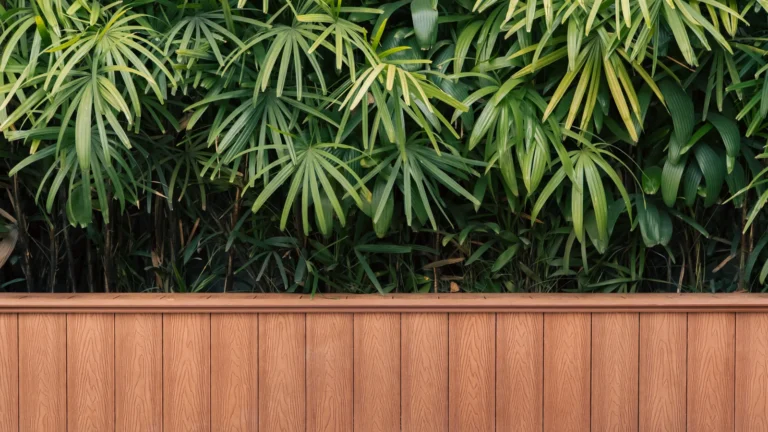
Emerald Green arborvitae or privet planted 2 to 3 feet apart forms a soft, green wall in three to five years. It’s the slowest and least fence-like option, but it’s quiet, it improves with age, and it can get you to 8 feet of screening where a hard fence can’t. Expect $30 to $80 per plant, plus a few seasons of watering.
8. Metal privacy screen
Laser-cut aluminum or steel panels mounted on posts give you a designer wall that’s nearly indestructible. They cost the most — $60 to $150 per linear foot — but they never warp, rot, or need paint. They’re often used as a short accent run rather than a full perimeter.
9. Chain link with privacy slats
If budget is the deciding factor, a chain link fence with woven PVC slats gets you roughly 80% visual blockage for $15 to $25 per linear foot installed. It’s not the prettiest option, but it’s honest and it works.
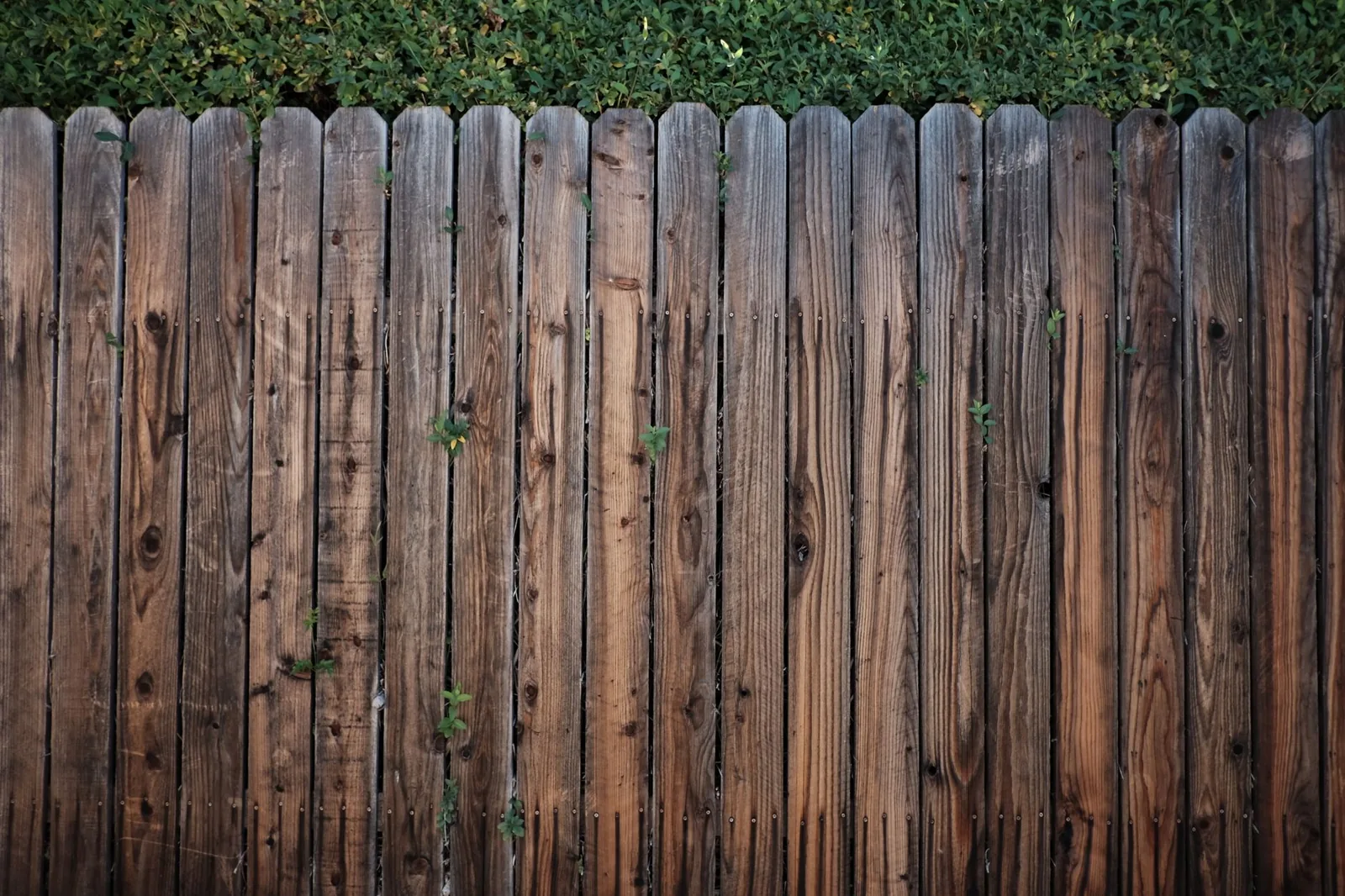
Photo by Snapwire via Pexels
Privacy Fence Ideas by Material: Wood, Vinyl, Metal, and Living Screens
Design matters, but material decides what your fence will look like in year five. Here’s the honest comparison:
| Feature | Wood (cedar/redwood) | Vinyl | Aluminum/Steel |
|---|---|---|---|
| Installed cost | $15–$45 / linear ft | $25–$40 / linear ft | $20–$60 / linear ft |
| Lifespan | 15–20 years | 25–30 years | 30+ years |
| Maintenance | Stain every 2–3 years | Hose down | None |
| Wind handling | Fair to good (gaps help) | Poor (solid panels) | Good (open profiles) |
| Privacy level | Full | Full | Semi to full |
Wood is the most forgiving if you want to build it yourself and like a natural look. Vinyl wins on maintenance. Aluminum and steel win on longevity and wind. None is best — they solve different problems. For a fuller breakdown of each material’s strengths, Bob Vila’s privacy fence guide is worth a look.
What a Privacy Fence Costs per Linear Foot
Prices swing more than most people expect, mostly on three levers: material, height, and whether you hire it out.
- Wood: $15 to $45 per linear foot installed. A typical 150-foot backyard perimeter lands between $2,250 and $6,750.
- Vinyl: $25 to $40 per linear foot. Materials alone run $15 to $25, with the rest going to labor and post setting.
- Aluminum and steel: $20 to $60 per linear foot, more for custom laser-cut panels.
- Living hedge: $30 to $80 per plant, which usually works out to $1,500 to $4,000 for a 50-foot run once you account for spacing.
Labor is the wild card. Setting posts in concrete is the single biggest cost driver, and digging through roots or rock can double a quote overnight. For a deeper look at how these numbers shake out, read our fence cost per linear foot guide.
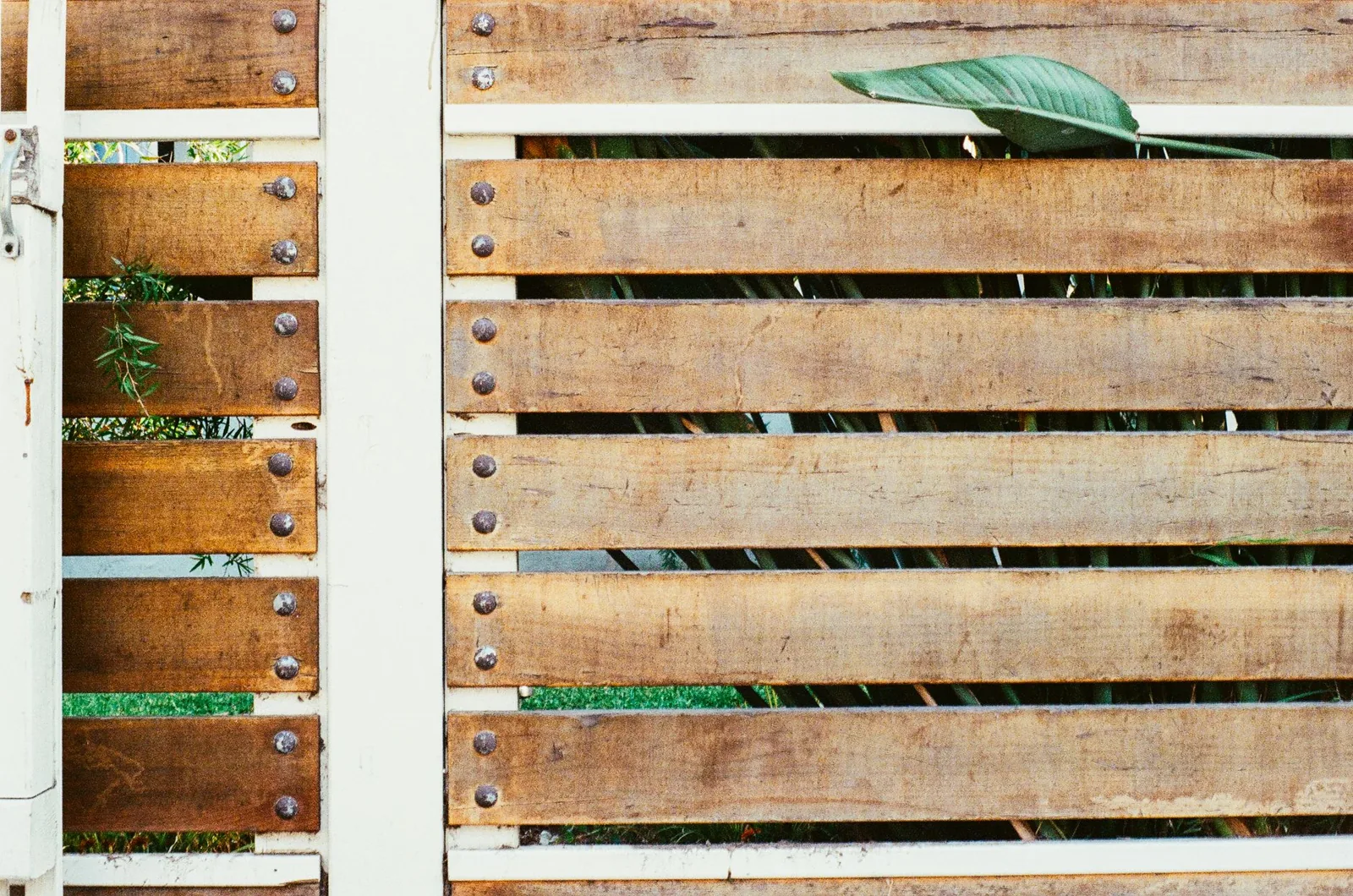
Photo by Jaymantri via Pexels
A DIY wood fence can cut the price in half, but only if you’re comfortable setting 4×4 posts in concrete and keeping every line straight. If that sounds like your project, start with our how to build a wooden fence walkthrough before you buy materials.
Frequently Asked Questions
What is the cheapest privacy fence?
Chain link with vinyl privacy slats is the cheapest way to get real visual blockage, typically $15 to $25 per linear foot installed. A basic pressure-treated wood shadowbox fence is the cheapest option that still looks like a proper fence, at $15 to $30 per linear foot.
How tall should a privacy fence be?
Six feet is the standard for backyard privacy and the tallest most codes allow without a variance. Some areas permit 8 feet with a permit, but check before you build — an over-height fence is the fastest way to a forced teardown.
Does a privacy fence add value to a home?
A well-maintained fence is a modest plus on resale — buyers in family-heavy neighborhoods value a closed-in yard — but you won’t recover anything close to full cost. Think of it as a quality-of-life purchase first, a resale bonus second.
Can I build a privacy fence myself?
Yes, if you’re comfortable with a post-hole digger, a level, and a weekend of concrete work. Wood is the most DIY-friendly material. Vinyl and metal panels are possible but less forgiving because they’re harder to cut and patch on site.
What blocks wind as well as views?
A shadowbox fence or a louvered metal panel blocks sight lines while letting air pass through, which keeps it standing in storms. Solid board or vinyl panels catch the most wind and may need deeper posts in exposed areas.
The Bottom Line
The right privacy fence ideas come down to three honest answers: how much privacy you actually need, what your lot will physically allow, and how much upkeep you’ll tolerate. Most people do well with a 6-foot board-on-board cedar or vinyl panel on a flat lot, a shadowbox where wind matters, and a living hedge where a hard wall would feel wrong.
Get your property lines surveyed, check your local height limits, and get three quotes before you commit. A fence is a long-term purchase — the extra week of planning is worth more than the cheapest quote you’ll find.