Fence Cost Per Linear Foot: 2026 Pricing by Material
Figuring out your fence cost per linear foot is the fastest way to turn a vague idea into a real budget. Whether you’re closing in a backyard for kids and dogs, screening a busy street, or adding curb appeal before a sale, almost every fencing estimate starts with this one number.
On a typical residential job in the United States, homeowners pay somewhere between $6 and $50 per linear foot installed, with most landing around $23 per foot. That spreads across a national average project cost of roughly $6,300 for a complete fence, according to Home Depot’s installation data. Where you fall in that range depends almost entirely on the material you choose, the height and length of the run, and where you live.
This guide breaks down the real numbers so you can compare quotes without getting lost in contractor jargon.
What Is the Average Fence Cost Per Linear Foot?
The phrase “per linear foot” simply means the price for one running foot of fence, measured along the ground rather than by square footage. A linear foot is 12 inches of fence line. So a 150-foot backyard perimeter would be priced at 150 times whatever your per-foot rate comes to.
Most professional quotes bundle material and labor into a single per-foot figure. That makes it easy to compare bids side by side, but it also means the number you hear depends heavily on what’s inside it. A $12-per-foot chain link fence and a $40-per-foot cedar privacy fence are both legitimate per-foot prices; they’re just paying for very different products.
Here’s the national picture for a standard 4- to 6-foot fence, installed:
- Chain link: $12–$25 per linear foot
- Pressure-treated wood: $15–$30 per linear foot
- Cedar or redwood privacy: $25–$50 per linear foot
- Vinyl: $20–$40 per linear foot
- Aluminum: $25–$60 per linear foot
- Wrought iron or steel: $25–$55 per linear foot
- Composite: $35–$60 per linear foot
Labor typically accounts for about half the total on an installed fence. If you’re willing to dig post holes and set panels yourself, you can often cut the final bill by 40 to 50 percent — at the cost of a weekend or two and some serious physical work.
Fence Cost Per Linear Foot by Material
Material is the single biggest lever on price, so it pays to understand what each option costs and why.
Photo by Jan van der Wolf via Pexels
Wood: $15–$50 per Linear Foot
Wood remains the most popular fencing material in the U.S., and its price range is the widest because “wood” covers several different products. Pressure-treated pine sits at the bottom of the range at $15–$30 per foot and is the standard choice for utilitarian or budget jobs. Cedar and redwood run $25–$50 per foot but resist rot and insects naturally, which is why they’re the go-to for privacy fences that need to last 15 to 25 years.
Wood’s hidden cost is upkeep. Plan on staining or sealing every two to three years, which adds roughly $2–$4 per linear foot each cycle. If you want a detailed look at building one, see how to build a wooden fence.
Vinyl: $20–$40 per Linear Foot
Vinyl (PVC) fences cost more up front than basic wood but almost nothing to maintain. They never need paint or stain and only ask for an occasional rinse with a hose. That near-zero upkeep is why many homeowners consider vinyl the better long-term value despite the higher sticker price. For a head-to-head comparison of the two most common choices, read vinyl fence vs. wood fence.
Chain Link: $12–$25 per Linear Foot
Chain link is the budget workhorse. A galvanized 4-foot run starts around $12 per foot installed, while a taller vinyl-coated fence in black, green, or brown runs $18–$25 per foot. It’s not the prettiest option, but for large properties, dog runs, and security perimeters it delivers the most coverage per dollar. Get the full breakdown in our chain link fence cost article.
Aluminum and Steel: $25–$60 per Linear Foot
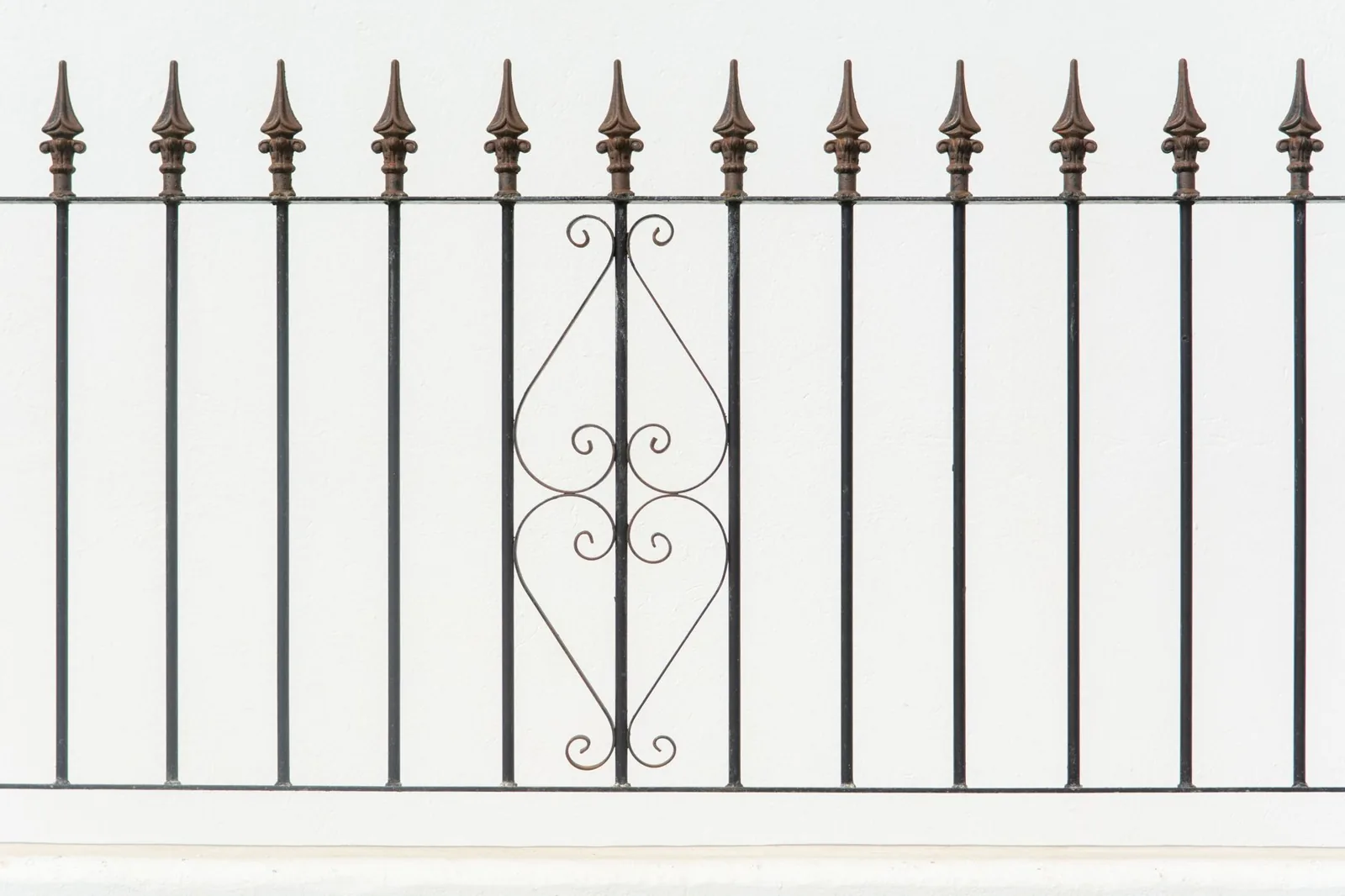
Aluminum gives you the decorative look of wrought iron without the rust. Expect $25–$60 per foot depending on height and ornamentation. True wrought iron or steel runs in a similar band, $25–$55 per foot, but weighs more and needs periodic rust treatment. Both are common for front-yard and pool fences where appearance matters more than privacy.
Factors That Move the Price Up or Down
Even the same material can swing by $20 per foot depending on the details of your job. These are the variables that explain most of the difference between quotes.
Height
A 4-foot fence costs noticeably less than a 6-foot one because it uses less material per post and often requires shorter posts. Moving from 4 to 6 feet typically adds 15 to 25 percent to the per-foot price.
Terrain and Existing Fence Removal
A flat, open yard is the cheapest surface to fence. Slopes, tree roots, rocky soil, and the need to demolish and haul away an old fence all push labor costs higher. Removing an existing fence runs $3–$7 per linear foot on top of the new installation.
Gates and Hardware
Every fence needs at least one gate, and gates are priced separately from the main run. A simple 3-foot walk gate might add $150–$400, while a double drive gate can add $500–$1,200 or more. Decorative post caps, lattice tops, and specialty hardware all tack on cost too.
Location and Season
Labor rates vary widely by region. Coastal metros and the Northeast often run 10 to 30 percent above the national average, while parts of the South and Midwest come in below it. Late spring and summer are peak fencing season, and booking a job in the off-season can occasionally yield a lower bid.
Material Cost Comparison at a Glance
The table below lines up the four most common options by upfront price, durability, and upkeep so you can see the trade-offs in one place.

Photo by Jan van der Wolf via Pexels
| Feature | Wood (Cedar/Pine) | Vinyl | Chain Link | Aluminum |
|---|---|---|---|---|
| Installed cost per linear foot | $15–$50 | $20–$40 | $12–$25 | $25–$60 |
| Typical lifespan | 10–25 years | 20–30 years | 15–25 years | 30+ years |
| Maintenance | Stain/seal every 2–3 years | Rinse only | Minimal | Minimal |
| Privacy | High | High | Low | Low |
| Best for | Privacy, classic look | Low-maintenance privacy | Budget, security, large lots | Front yards, pools, curb appeal |
How to Estimate Your Total Fencing Budget
Once you know your target per-foot price, the rest is straightforward arithmetic. Measure the perimeter you plan to fence, subtract any runs that won’t be fenced, and multiply the remaining linear feet by your material’s per-foot rate.
A few real-world examples make the math concrete:
- 100 feet of chain link at $18/foot: about $1,800, plus one gate.
- 150 feet of cedar privacy at $40/foot: about $6,000, plus gates.
- 200 feet of vinyl at $30/foot: about $6,000, plus gates.
Always add 10 to 15 percent to whatever estimate you arrive at. Property lines are rarely as straight as the plan, and extras like gates, post caps, and old-fence removal have a way of showing up mid-project.
Get three written quotes and compare them line by line rather than on total price alone. One contractor’s “cheap” bid often quietly drops site prep or gate hardware that another includes, which is how two bids for the same fence can land $2,000 apart.
Practical Ways to Lower Your Fence Cost Per Linear Foot
You can shave real money off a fence without sacrificing much quality. The tactics below are ordered from easiest to most involved.
- Shorten or reposition the run. Reducing a 200-foot perimeter to 150 feet saves 25 percent of the material cost before you touch anything else.
- Choose a shorter height. A 4-foot fence meets code for many front-yard and pool-gate situations and costs less than a 6-foot one.
- Standardize panel sizes. Custom or non-standard panel widths generate waste; stock sizes are priced to sell.
- Skip decorative extras. Post caps, lattice tops, and scalloped panels look nice but add $3–$10 per foot without improving function.
- DIY the demolition. Ripping out the old fence yourself saves the $3–$7 per foot removal charge, though you’ll still need to haul and dispose of the debris.
- Buy materials in the off-season. Lumber yards and fence suppliers often discount stock in late fall and winter.
If you’re still weighing whether a fence is even the right privacy solution for your yard, our privacy fence ideas roundup covers alternatives worth considering first.
Frequently Asked Questions
How much does a 6-foot privacy fence cost per linear foot?
A 6-foot wood privacy fence runs $25–$50 per linear foot installed, with pressure-treated pine at the low end and cedar or redwood at the high end. Vinyl privacy panels typically fall between $20 and $40 per foot for the same height.
Is it cheaper to build a fence yourself?
Yes — usually by 40 to 50 percent. You’re mainly eliminating labor, which accounts for about half of an installed fence’s price. The trade-off is time, tools, and the physical effort of digging post holes and setting posts straight.
What is the cheapest fence to install?
Chain link is consistently the cheapest option at $12–$25 per linear foot installed. Among privacy fences, pressure-treated pine at $15–$30 per foot is the least expensive way to get full screening.
Does fence height affect cost per linear foot?
Yes. Taller fences use more material and require longer, more expensive posts, so moving from 4 to 6 feet typically adds 15 to 25 percent to the per-foot price.
How long does a fence last?
It depends on material. Pressure-treated wood lasts 10–15 years, cedar and redwood 15–25 years, vinyl 20–30 years, and aluminum 30 years or more. Maintenance is the main factor in how close a fence gets to the top of that range.
For contractor pricing ranges, Angi breaks down fence installation costs by material.
The Bottom Line
Fence cost per linear foot is the number that turns a fencing project from a daydream into a plan. For most homeowners, $12 to $50 per foot covers nearly every realistic option, with wood, vinyl, and chain link occupying the middle ground where most budgets live.
Start by measuring your actual perimeter, pick a material that matches both your budget and your tolerance for maintenance, and collect at least three itemized quotes before signing anything. A fence is a long-term structure on the most visible part of your property, so a little upfront research on per-foot pricing pays for itself many times over.
If you’re ready to compare materials in more depth, our guides to vinyl fence vs. wood fence and chain link fence cost will help you lock in the right number for your yard.